MPoweredHub logo with blue-green lettering and a curved blue line.
Reading time: about 15 minutes

New Creatio Pricing Model: What the Unlimited Plan Means for Businesses

With its new Unlimited Plan, Creatio simplifies the use of CRM, no-code tools, and AI. Learn about the benefits of this pricing model and which companies it’s particularly suited for.

Artificial intelligence isn’t just changing the functionality of modern business software; it’s also challenging traditional licensing and pricing models. Many CRM and workflow solutions continue to be billed based on the number of human users. However, as AI agents increasingly take on tasks and support entire process steps, a pure “price-per-user” model no longer accurately reflects actual usage.

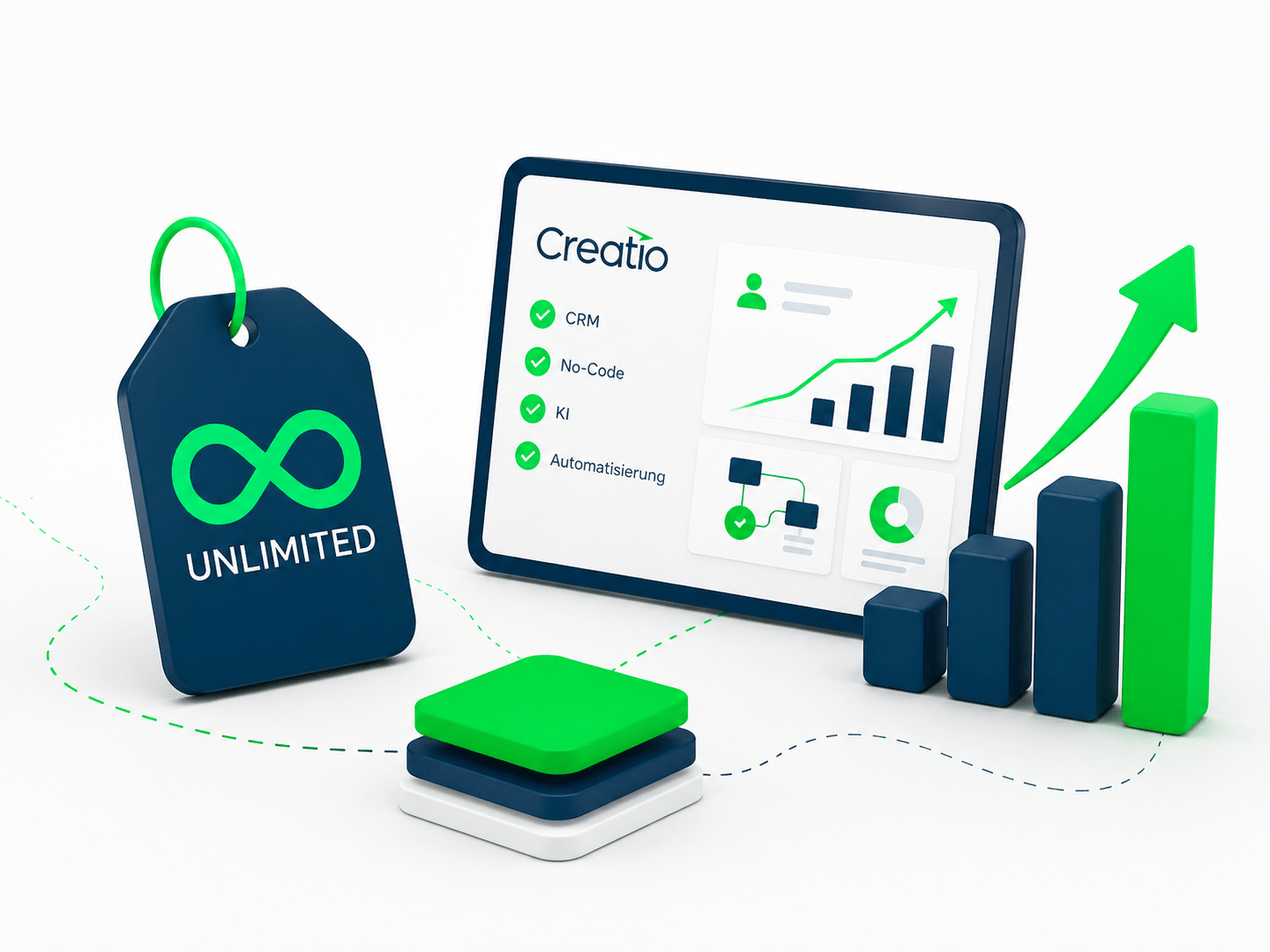
With its new Unlimited Plan, Creatio is responding to this trend. Companies should be able to scale users, applications, workflows, and custom-developed AI agents across the entire organization without having to account for every expansion through additional user licenses.

Even prospective customers searching online for “studio creatio” or “creatio software” will thus encounter an important innovation: Creatio is increasingly evolving from a traditional CRM and workflow solution into a comprehensive platform for AI-powered business processes.

At the heart of this are so-called AI agents. They can analyze information, summarize content, update data records, and execute defined tasks within a business process.
For B2B companies, this opens up new opportunities to bring together CRM, artificial intelligence, and automation on a single platform.

Key Information About the Creatio Unlimited Plan

The Unlimited Plan is primarily aimed at companies that want to use Creatio not just within individual teams, but across departments and locations.

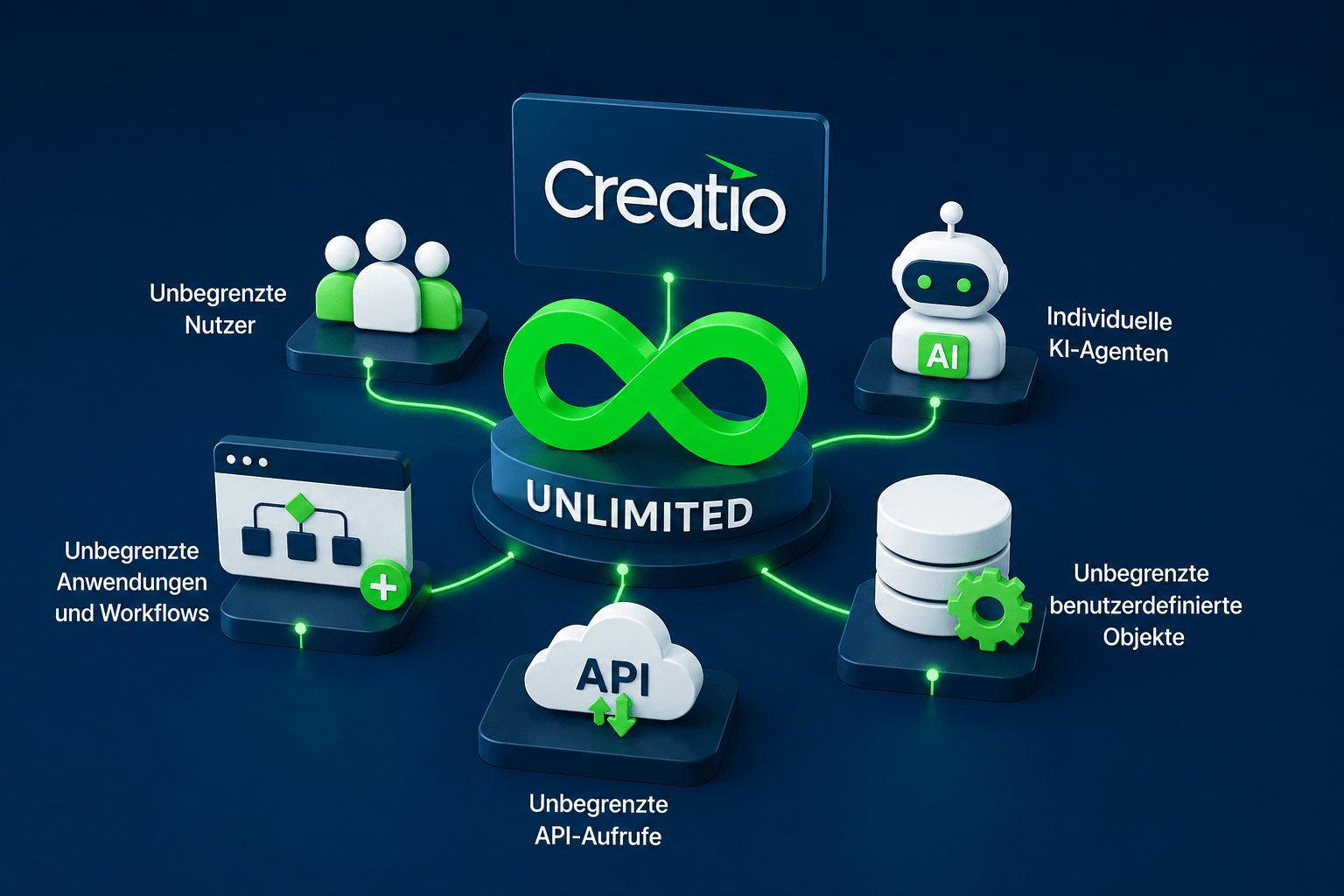
The plan includes, among other things:
  • an unlimited number of users
  • Custom-developed AI agents
  • Unlimited applications and workflows
  • Unlimited custom objects and API calls
The price is not calculated solely based on a fixed number of user licenses. Instead, pricing is determined on a case-by-case basis and is based on the size and planned scope of use of the respective organization.

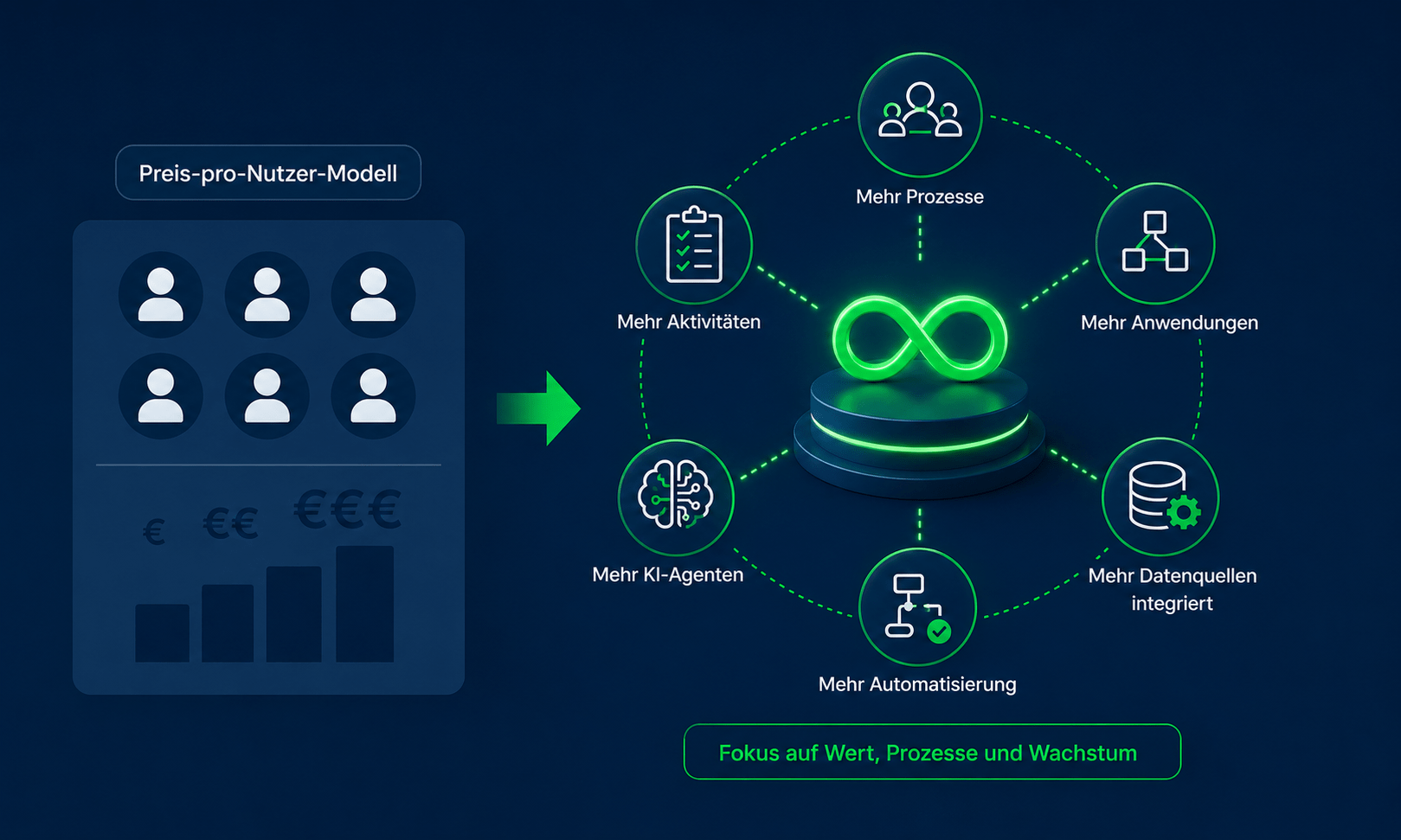
The key difference: The focus shifts from the number of individual software licenses to company-wide execution and automation of business processes.

Why the Traditional Per-User Pricing Model Is Reaching Its Limits

Traditional SaaS models follow a simple principle: The more people use a piece of software, the higher the licensing costs.

This model made sense for a long time. After all, nearly all activities within enterprise software were carried out directly by employees. They entered customer data, processed service cases, updated sales opportunities, or initiated workflows.

The use of artificial intelligence is changing this way of working. AI agents can, for example:
  • Analyze and Categorize Customer Inquiries
  • Summarize the content of a conversation
  • Pre-qualify leads
  • Pre-qualify leads
  • Prioritize Tasks
  • Automatically execute defined process steps
As a result, it is no longer just the number of people accessing a platform that matters. What is becoming more important is how many business processes, applications, and automated activities can be handled through the platform.
This is exactly where Creatio’s new pricing model comes in.

Comparison of the User-Based Model and the Unlimited Plan

Criterion User-Based Model Creatio Unlimited Plan
Pricing Basis Number of licensed users Size and Scope of the Organization
Number of users Depending on the number of licenses purchased Unlimited number of users
AI Agents Depending on the plan and scope of coverage Custom-developed AI agents with no fixed number
Applications and Workflows Depending on the package you choose Unlimited Applications and Workflows
Scaling Additional users increase licensing costs Designed for broad enterprise use
Typical Applications Individual teams and clearly defined processes Company-wide CRM, AI, and Automation Strategy

The Unlimited Plan is therefore not automatically the best solution for every company. It is particularly appealing to organizations that pursue a long-term, broad-based platform strategy.

New Opportunities for Process Automation

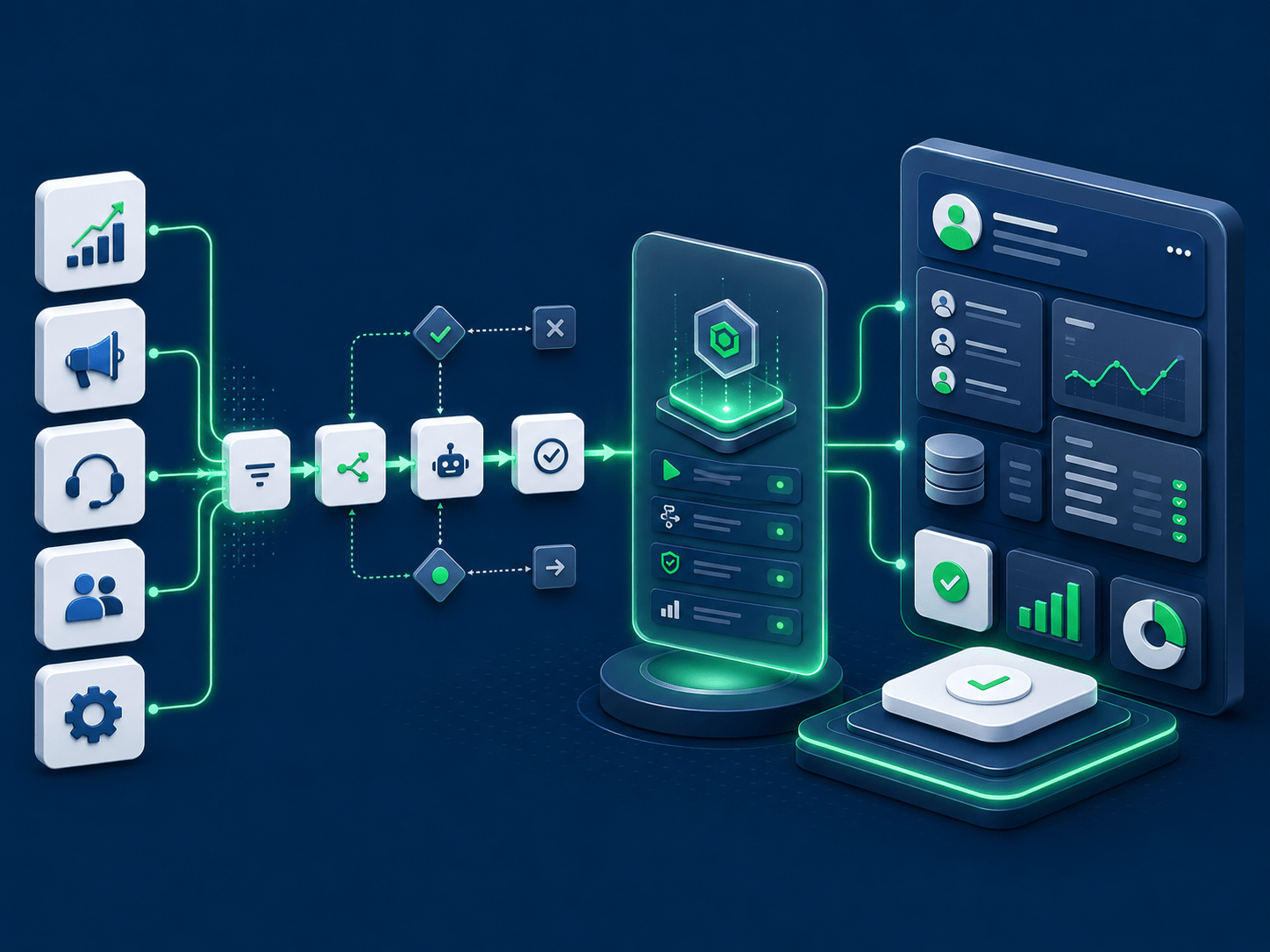
Process automation is one of Creatio’s core areas of application. Companies can reduce manual tasks, clearly define responsibilities, and automatically route information to the right place.
This goes beyond simple approvals or notifications.

With Creatio, even more complex end-to-end processes can be mapped, for example in sales, marketing, customer service, partner management, or internal administrative areas.
The search term “process automation software” therefore describes only a portion of the possible scope of application. Creatio combines technical automation with CRM functions, data management, artificial intelligence, and the development of custom applications.

For companies, this means that processes no longer need to be managed in isolation within different standalone solutions. Instead, data, tasks, and decisions can be interconnected within a single platform.

Creatio as a No-Code Platform

Creatio is also a no-code platform that enables companies to develop applications and workflows without extensive traditional programming.
This allows line-of-business departments to be more closely involved in digital transformation projects. Requirements do not have to be implemented exclusively through lengthy development projects. Instead, new processes, forms, data models, and user interfaces can be configured and tested more quickly.
This offers three main advantages:
1. New requirements can be implemented more quickly.
2. Business units and IT work more closely together.
3. Successful pilot projects can be more easily scaled to other teams.
Complex integrations, custom extensions, or specific security requirements still require technical expertise. “No-code” therefore does not mean that IT expertise is no longer necessary. However, the technology can shorten development times and increase the platform’s adaptability.

Growth, Enterprise, or Unlimited?

Creatio does not completely replace the existing licensing models. Companies can still choose between different pricing plans.

Growth

The Growth Plan is particularly well-suited for organizations that want to start with a clearly defined CRM or automation project. This could include, for example, the implementation of a sales system or the digitization of a single business process.

Enterprise

The Enterprise Plan is designed for companies with higher requirements for scalability, governance, integrations, and complex process logic.

Unlimited

The Unlimited Plan takes it a step further. It is designed for companies that want to use Creatio long-term for a large number of users, applications, workflows, and AI agents.
The key question, therefore, is not just:
“How many users need a license today?”
Rather, companies should assess the extent to which they intend to utilize CRM, automation, and artificial intelligence in the coming years.

Creatio AI Studio and the Use of AI Agents

Creatio AI Studio is designed to enable companies to develop and manage AI agents and integrate them into existing business processes.

Depending on the use case, these agents can analyze information, create content, or perform defined tasks within a workflow. For example, an AI agent could review incoming customer inquiries, compile relevant information from the CRM, and suggest an appropriate next step.
However, it is not just the technical development of such agents that is crucial. Control, transparency, and governance are equally important.

Before deployment, companies should clarify the following:
  • What data is the AI agent allowed to access?
  • What tasks is he allowed to perform on his own?
  • When is human approval required?
  • How are results verified and documented?
The professional use of AI requires clear lines of responsibility. AI agents should provide targeted support to employees and be integrated into transparent business processes.

Creatio for Customer Relationship Management

Customer Relationship Management remains a central component of the Creatio platform. Companies can map sales, marketing, and service processes on a shared database.

This provides a more comprehensive view of customers, prospects, and business partners. For example, sales representatives can see not only open sales opportunities but also past contacts, service requests, marketing activities, and relevant process information.

Even companies that use the search term “software customer relationship management” in their research are often looking for a solution that offers more than a traditional customer database. Today, integrated workflows, intelligent assistance features, and the ability to adapt processes to individual business models are crucial.
Creatio combines these requirements within a single platform.

From a CRM Solution to a Workflow Management Platform

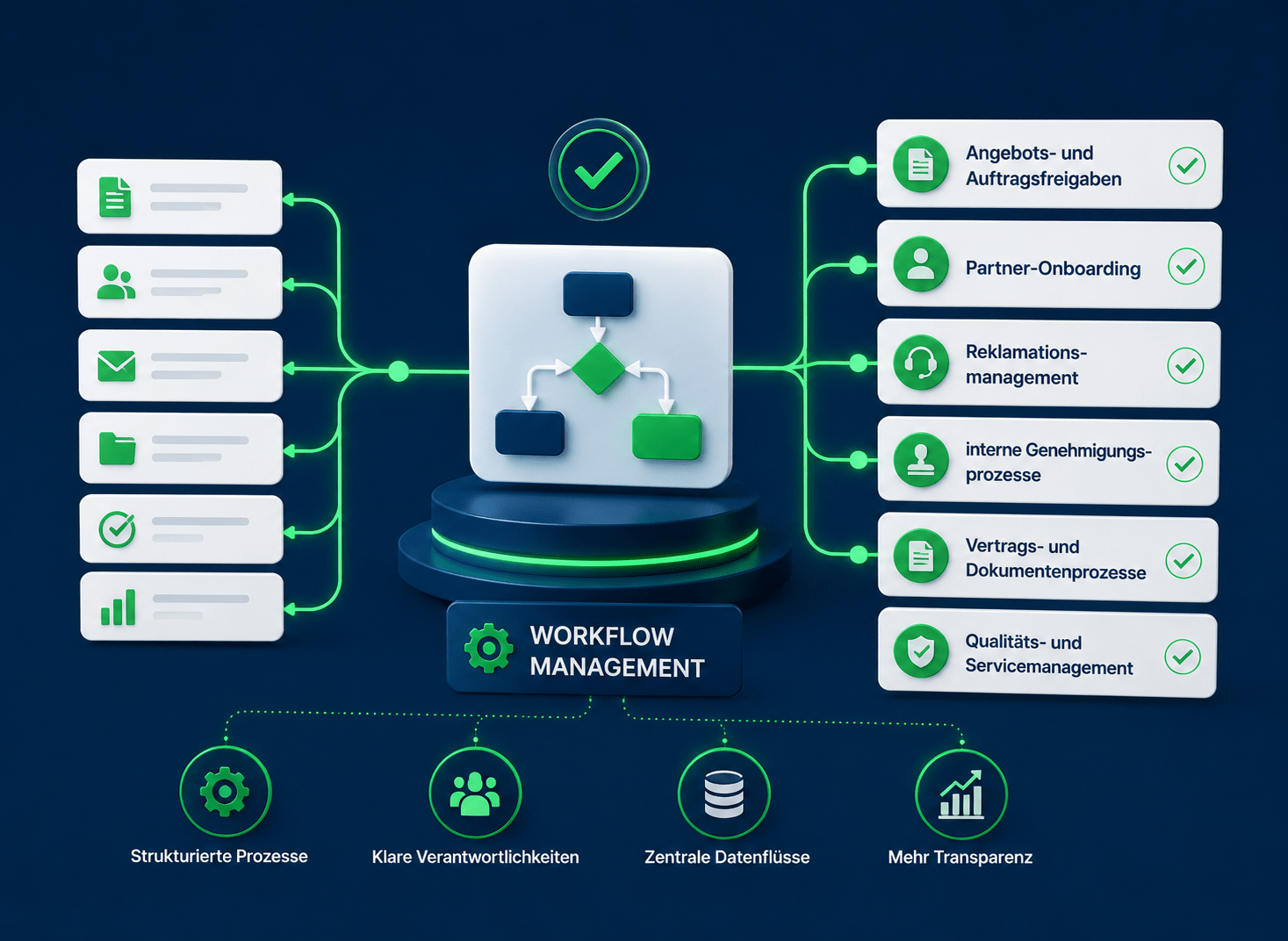
Creatio isn't just for customer-related processes. As a workflow management platform, the solution helps companies organize tasks, approvals, and data flows even outside the traditional CRM framework.

Possible areas of application include, for example:
  • Quotation and Order Approvals
  • Partner Onboarding
  • Complaint Management
  • internal approval processes
  • Contract and Document Processes
  • Quality and Service Management
This allows Creatio to serve as a platform that connects different departments. The goal is to reduce media discontinuities and create end-to-end processes.

What are the benefits of the new pricing model?

Company-wide Use

In many companies, only a limited portion of the workforce actively uses the CRM. Other departments continue to use spreadsheets, emails, or additional line-of-business applications.
An unlimited user model can make it easier to integrate additional departments into a central platform. This transforms Creatio not only into a sales tool, but also into a company-wide process platform.
Scaling Successful AI and Automation Projects

Many companies start with individual pilot projects. For example, an AI agent might assist the sales team with lead qualification or help customer service analyze inquiries.
Once a pilot project is successful, it’s often rolled out to other teams or locations. The Unlimited Plan can help integrate additional users, workflows, and agents without having to go through a completely new licensing process for each expansion.

Consolidation of the System Landscape

Creatio combines CRM, process management, no-code development, and artificial intelligence on a single platform.

Area Potential Benefits
Data Management A more consistent and up-to-date database
Processes Seamless end-to-end workflows
Integration Fewer interfaces between standalone solutions
Governance Centralized Management of Roles and Permissions
Reporting Improved comparability of corporate data

In the long term, this type of consolidation can help reduce manual work and improve transparency regarding customers and processes.

Does “Unlimited” automatically mean lower costs?

No. Unlimited usage does not automatically mean that the plan is more cost-effective for every company.
A company with few users and a clearly defined CRM process may be better served by a Growth or Enterprise plan.
The Unlimited plan becomes particularly attractive when:

• many employees and departments are to be involved,
• numerous applications and workflows are planned,
• AI agents are used company-wide,
• Creatio is to be established as the central platform in the long term.

For a well-founded evaluation, companies should consider more than just licensing costs. Implementation, data migration, integrations, training, operation, and further development are also part of the total cost of ownership.
These costs are offset by potential savings, such as shorter process runtimes, fewer manual tasks, and a reduced number of standalone solutions.

A Short Checklist for Businesses

Before choosing a Creatio licensing model, you should answer four questions:

Test Field Key Question
Users How many active and occasional users are expected to use Creatio?
Processes Which departments and workflows should be integrated?
AI What tasks should AI agents take on?
Cost-Effectiveness How do the total costs change over several years?

This analysis provides a solid basis for comparing Growth, Enterprise, and Unlimited.

Classification of MPowerdHub

From MPowerdHub’s perspective, the new Creatio pricing model is more than just an adjustment to the licensing structure.
It demonstrates the extent to which enterprise software is being transformed by artificial intelligence, no-code technologies, and automated process execution. Going forward, the key question will no longer be solely how many people use a piece of software.

What really matters is this:
How many relevant business processes can a platform support reliably, scalably, and cost-effectively?

MPowerdHub helps companies analyze their requirements in a structured manner and deploy Creatio in a way that aligns with their respective business strategies.
Services range from process analysis and the development of a CRM strategy to the selection of the appropriate licensing model, as well as the implementation, integration, and long-term development of the platform.
MPowerdHub also supports companies from the initial idea through to productive use when it comes to custom no-code solutions, data migrations, and the design of practical AI use cases.

Creatio is aligning its pricing model with the future of work

With the Unlimited Plan, Creatio is responding to a fundamental shift in the enterprise software market.
Human users, automated workflows, and AI agents are increasingly working together on a single platform. A pure per-user pricing model no longer fully reflects this development.
The new model may be of particular interest to larger B2B companies that want to deploy Creatio company-wide, automate numerous processes, or pursue a comprehensive AI strategy.
However, “Unlimited” isn’t automatically cheaper or better. Cost-effectiveness depends on your specific situation, the planned number of users, and your long-term platform strategy.


Want to find out which Creatio model is right for your company?
The experts at MPowerdHub can help you assess your processes, user numbers, automation goals, and planned AI use cases.

Frequently Asked Questions About the Creatio Pricing Model

The Unlimited Plan is a licensing model designed for broad, enterprise-wide use. It includes, among other things, an unlimited number of users, applications, workflows, and custom-developed AI agents. The price is calculated on a case-by-case basis based on the organization and the planned scope of use.

No. The user-based Growth and Enterprise plans will remain available. Companies can choose the plan that best suits their needs based on their size, feature requirements, and scaling goals.

This plan is particularly well-suited for larger or rapidly growing companies that want to manage multiple departments, locations, and processes through Creatio. It may also be a good fit for companies with a comprehensive automation or AI strategy.

No. Whether this model is more cost-effective depends on the number of users, the planned scope of features, and the long-term strategy. Therefore, the total costs should be considered over several years.

MPowerdHub analyzes current processes, user numbers, planned applications, and automation goals. Based on this analysis, it determines whether the Growth, Enterprise, or Unlimited plan best aligns with the company’s individual strategy.
30 minutes. No sales pitch. Just an open conversation about the challenges you face.
© 2026 MPoweredHub GmbH All rights reserved.
Made by komenci