The Most Important Criteria for Selecting a Low-Code Platform
1. Process and Application Fit
A platform must be suited to your planned use cases. Are you dealing with internal line-of-business applications, service workflows, CRM-related processes, BPM scenarios, or rapid app development? Low-code tools should not only be generally powerful, but should also support your specific workflows.
2. CRM, BPM, and integration capabilities
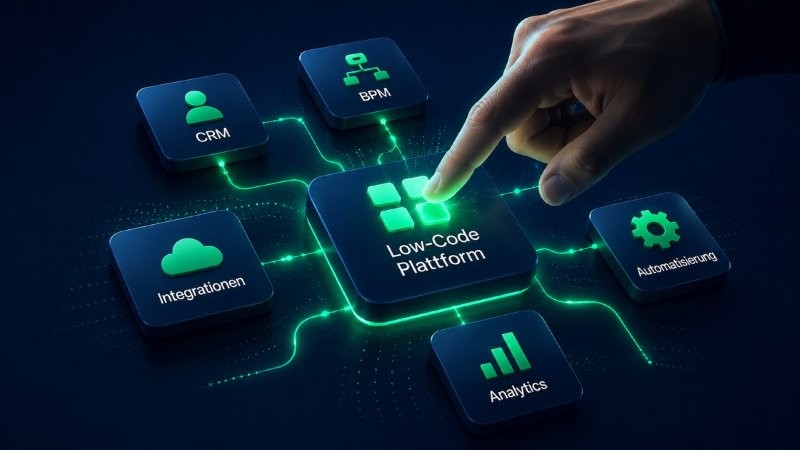
For many B2B companies, how well the platform integrates with existing systems is crucial. A good low-code platform seamlessly connects CRM, BPM, data, and integrations. When multiple systems need to work together, this factor quickly becomes more important than individual user interface features.
3. Ease of Use for Academic Departments and IT
Low-code development works best when both business units and IT can use it effectively. The interface should be easy to understand without sacrificing technical depth. That is precisely what sets many robust platforms apart from solutions that only appear simple on the surface.
4. Governance, Security, and Scalability
Low-code programming must remain manageable even at the enterprise level. Roles, approvals, versioning, security, and authorization models are therefore just as important as the speed of development. Neglecting this aspect will create new risks down the line.
5. Scalability and Future-Proofing
A platform should grow alongside the company. This applies to user numbers, data volumes, processes, new apps, and integrations. Especially when companies want to strategically leverage low-code development, the solution must be sustainable in the long term.